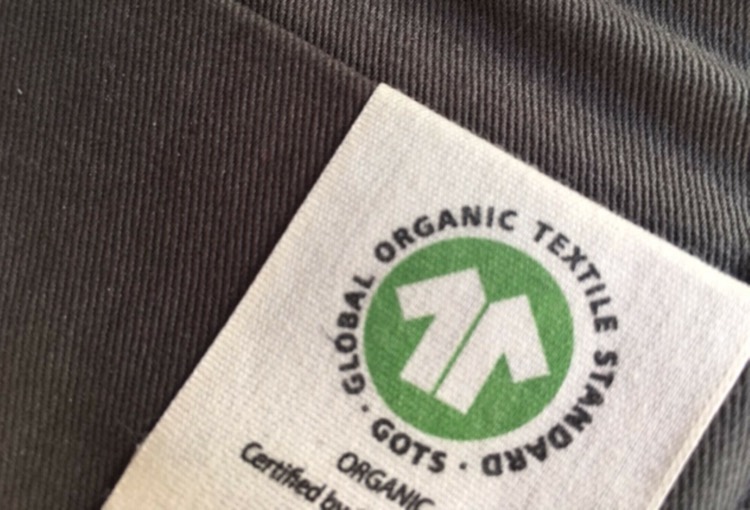
Stuttgart – Global Standard has reported that the number of facilities certified to the Global Organic Textile Standard (GOTS) grew by more than 15% in 2025, reaching around 17,800 sites worldwide across 95 countries.
The organisation says the latest figures underline how mills, converters and brands are turning to independently governed schemes to manage regulatory risk and substantiate sustainability claims in increasingly complex textile supply chains.
According to Global Standard’s 2025 Annual Report, the expansion of GOTS certification came despite ongoing geopolitical uncertainty and a rapidly evolving regulatory landscape affecting fibre, spinning, knitting, dyeing and garment-making operations.
For knitting and hosiery manufacturers supplying international brands, the standard is increasingly used as a framework to demonstrate traceable use of certified organic fibres from raw material through to finished fabric and garments.
GOTS is positioned as a system-level standard that addresses environmental, social and labour risks across the textile value chain, rather than focusing solely on individual products or facilities. This breadth is relevant for vertically integrated operations that combine knitting, dyeing, finishing and making-up, where compliance must cover chemical inputs, wastewater, worker protections and traceability of organic fibre content.
Regulatory developments in 2025, including due‑diligence and green‑claims rules in key markets, have increased scrutiny of how brands and suppliers substantiate sustainability statements. In this context, Global Standard reports that demand for robust, third‑party standards remains strong as companies seek to align internal risk management with external expectations on transparency and responsible sourcing.
A major milestone for the organisation during the year was the OECD Due Diligence Alignment Assessment of GOTS, which found that 98% of assessed criteria were either fully or partially aligned with OECD guidance. The outcome places GOTS among the more comprehensively aligned initiatives reviewed to date and gives mills and brands a clearer link between certification requirements and international expectations on risk‑based due diligence.
Alongside GOTS, Global Standard is extending its framework beyond organic fibres through the planned Global Responsible Textile Standard (GRTS), which completed a first public consultation in 2025. GRTS is designed to apply similar system‑based logic to non‑organic fibres, establishing a baseline for responsible processing where organic definitions do not apply and providing mixed‑fibre knitting operations with a more coherent approach to managing responsibility across different yarn types.