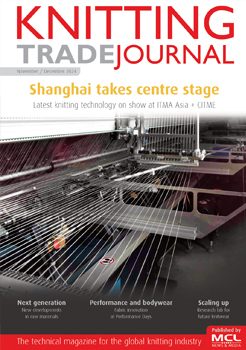
Shanghai – ITMA Asia + CITME 2026 will take place at the National Exhibition and Convention Center in Shanghai from 20 to 24 November, bringing together suppliers across the textile machinery value chain, including major knitting technology builders.
The exhibition will occupy seven halls and around 180,000 square metres of gross exhibition space. This represents a 10% increase on the previous edition, reflecting continued machinery investment interest across China and wider Asian textile manufacturing markets.
For knitting and hosiery producers, the event will provide an opportunity to assess developments in circular and flat knitting, automation, digital production control and resource-efficient processing. Confirmed exhibitors include Shima Seiki, Groz Beckert, Karl Mayer, Santoni and Cixing, alongside suppliers active in yarn preparation, man-made fibres, finishing, testing and garment manufacture.
More than 1,800 companies have applied to exhibit, with almost 90% based in China. The organiser said exhibits will be arranged by production process, covering sectors from spinning and knitting through to dyeing, finishing, recycling, packaging and nonwovens.
The knitting section is expected to be relevant to manufacturers producing apparel, seamless garments, sportswear, hosiery, footwear uppers and technical knitted structures. Machinery developments in these segments increasingly centre on shorter development cycles, more flexible patterning, reduced manual intervention and closer integration between design, programming and production.
Digitalisation and intelligent manufacturing will be prominent themes across the show. Suppliers are expected to present machine controls, production-management systems and automation solutions intended to support more consistent fabric quality, higher machine utilisation and improved traceability through the manufacturing chain.
The 2026 edition will also introduce areas for textile-reinforced composite equipment, textile recycling technologies and digital platforms. These additions reflect growing demand for machinery capable of processing recycled materials, handling more specialised yarns and supporting new textile applications beyond conventional apparel.
A dedicated Research and Innovation sector will feature Chinese universities and examples of industry-academia collaboration. Demonstrations are set to include embodied robots for textile applications, intelligent inspection systems and artificial-intelligence development platforms.
For knitwear and hosiery mills, inspection and AI-based process tools could have practical relevance in identifying fabric faults, monitoring production parameters and reducing off-quality output. Such technologies may also help manufacturers manage increasingly complex product mixes while addressing pressure on labour availability and operating costs.
Sustainability will run through the exhibition’s machinery agenda, particularly in relation to energy and resource efficiency, recycling and smarter production. While the organiser has not specified product-level environmental claims for individual exhibitors, the focus indicates continued investment in lower-waste manufacturing and circular-material processing.
The previous 2024 edition attracted more than 90,000 visitors from 111 countries and regions, although almost 90% of attendees came from China. The organiser reports stronger participation from South America, notably Argentina, Brazil and Colombia, as well as growth from Algeria, Japan, Italy, Sri Lanka, Turkey and the UK.
International visitor promotion has continued in 2026 through activities in India, Indonesia, Japan, Malaysia and Turkey, with further programmes planned for Bangladesh, Brazil, Egypt, Pakistan and South Africa. This wider outreach is intended to reinforce the event’s role as a sourcing and investment platform for regional and export-oriented textile producers.
Trade visitor pre-registration is open until 19 November through the ITMA Asia and CITME websites, with a 40% early-bird ticket discount.