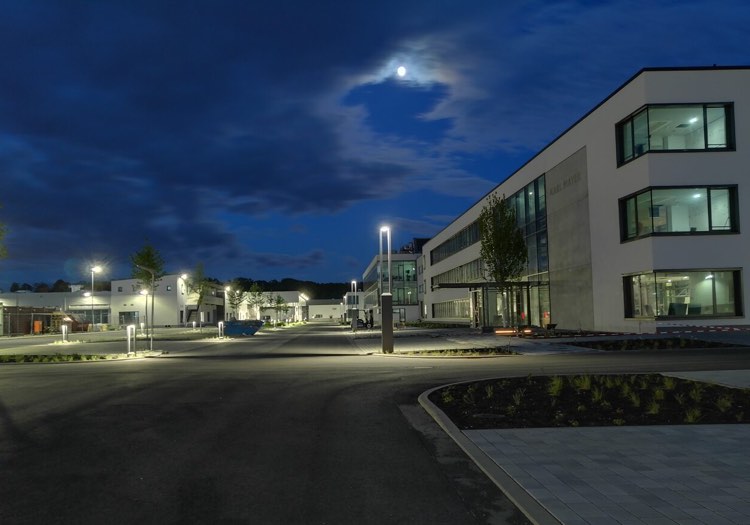
Obertshausen - Knitting machine builder Karl Mayer has officially moved into its new headquarters. The new building with its ultra-modern architecture, together with a staff canteen, now forms the focal point of the new Karl Mayer Campus at the Obertshausen, Germany site.
The building complex covers an area of 5,600 m² and is designed for 150 employees and visitors to exchange ideas and network, while also representing the further development of the historic knitting technology firm.
Company CFO Dr. Helmut Pressl said that Karl Mayer, which combines global market leadership whilst retaining the roots of a traditional family business, was now a growing international group of companies with three strong brands - Karl Mayer, Stoll and Km.On - and an extended focus on business areas outside the textile world. "We are looking forward to welcoming our international guests to a headquarters that, with its modern, transparent design and inspiring atmosphere, and that reflects the dynamics, cosmopolitanism and innovative strength of the Karl Mayer Group," he said.
The new building features a light-flooded foyer in which a large media wall provides information on the latest news, as well as a showroom dedicated to the company and family history. An Innovation Hub provides space and opportunities for new ideas and developments together with customers from all over the world.
The office floors are also highly flexible and modern. Office areas, meeting rooms and places of retreat can be changed according to the situation by modifiable furnishing and seating arrangements. Open entrances, glazed walls and other areas can be used in a variety of ways to promote communication. "With our space and building concept, we want to promote a sense of togetherness and broaden horizons," said Arno Gärtner, CEO of the Karl Mayer Group.
In addition to performance, the ecological footprint of the new building is also significant. Air-source heat pumps take care of the entire energy supply, economical, long-lasting LED technology reduces power consumption, and digitization means that work is paperless wherever legally possible.
Recycled materials were also used where practical and feasible. For example, the paving stones in the outdoor areas were already in use. Almost all roof surfaces are extensively greened, providing habitats for insects and retaining rainwater. In addition, all materials used meet the specifications for a healthy working climate, and all current legal requirements for thermal insulation are complied with.