Mocksville – Renaissance Fiber has secured $2.239 million in financing to complete and operate its first commercial-scale hemp fibre processing facility in Mocksville, North Carolina.
The investment will fund manufacturing infrastructure, raw material purchases and inventory as the company moves from research and development into commercial production.
The package combines $2 million in US Small Business Administration-backed financing, a $100,000 low-interest loan from the Fibers Fund and a $139,000 zero-interest recoverable loan from Invest Appalachia. The bank financing comprises a $1.5 million term loan and $500,000 in revolving credit through the SBA’s Manufacturers Access to Revolving Credit programme.
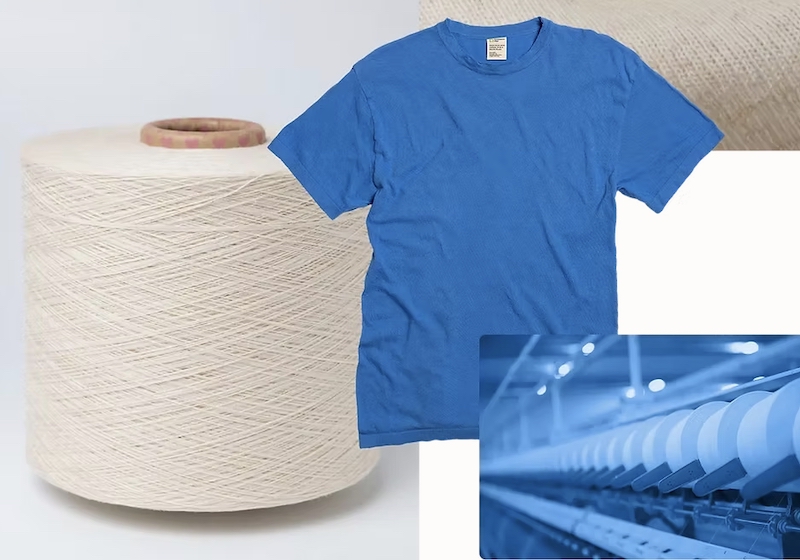
Renaissance Fiber uses a proprietary two-stage process to manufacture softened hemp fibre. Raw fibre is first degummed, then refined into material suited to spinning on existing cotton and synthetic-fibre equipment. The company also reports compatibility with equipment used by wool mills.
Compatibility with established machinery is central to the company’s commercial proposition. Renaissance Fiber says its process addresses the need for specialised hemp processing infrastructure, allowing textile manufacturers to use existing equipment rather than dedicated hemp systems.
“This financing gives us the infrastructure and working capital to process American-grown hemp at commercial scale, using the textile manufacturing base that already exists in North Carolina and across the US,” said Daniel Yohannes, founder and chief executive officer of Renaissance Fiber.
The company purchases raw fibre from US growers and works with farmers, yarn spinners, textile mills and product manufacturers. Its Mocksville operation is intended to connect domestic agricultural feedstock with established textile manufacturing capacity.
The Fibers Fund and Invest Appalachia announced their support in April 2026. According to the announcement, these early commitments helped Renaissance Fiber obtain the larger SBA-backed package, addressing the financing gap between proving a processing technology and establishing commercial production.
“Buyers seek scaled production before committing to contracts, but textile businesses can’t scale production without capital,” said Sarah Kelley, managing director of the Fibers Fund. The funding therefore supports both factory infrastructure and the working capital needed to move towards commercial supply. [Annual capacity, customer commitments, environmental performance data and certifications were not disclosed.]
Construction at Mocksville is under way and is expected to finish before the end of 2026, followed by commissioning and optimisation. The next phase will focus on bringing the processing operation into service and establishing a consistent, commercially viable domestic hemp fibre supply.