Wakayama - Flat knitting solutions provider Shima Seiki will demonstrate its latest technology for shoe production when it exhibits at the upcoming FIMEC 2020 exhibition in Brazil.
FIMEC 2020 is the 44th International Trade Fair for Leather, Chemicals, Components, Machinery and Equipment for Footwear and Tanning and takes place in Rio Grande do Sul, Brazil from 10-12 March.
Shima Seiki will be present together with its Brazilian representative Brastema Tecnologia Textil at Pavilion 5, Aisle JPK, Booth 5059.
The global shoe industry is currently evolving at a rapid pace, adopting various textile and material technologies especially in the area of fit, comfort and functionality in footwear applications. Working off the recent trend in knitted shoe uppers in the athletic footwear market, Shima Seiki proposes knitted fabrics to the general footwear market as an alternative to the prevailing material in this field - leather. To that effect Shima Seiki will be showcasing the latest applications of computerized flat knitting technology to demonstrate its contributions in this field.
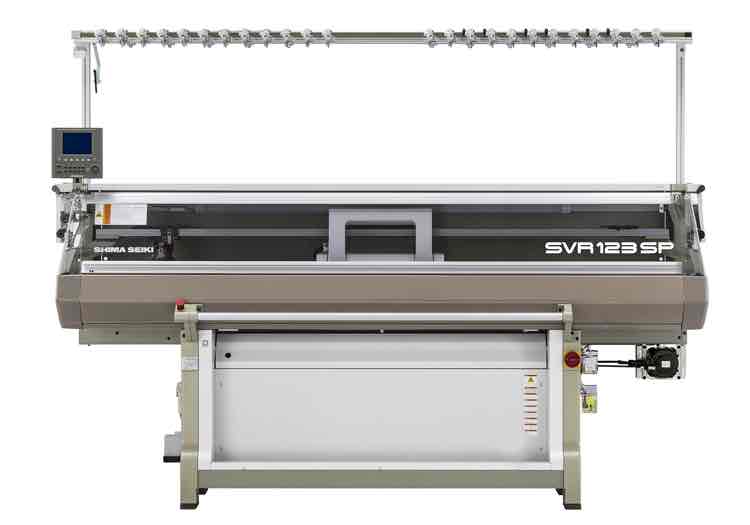
On display will be the company’s SVR123SP and SSR112 computerized flat knitting machines. The SVR123SP machine features a dedicated loop presser bed mounted above the rear needle bed. This permits full use of inlay technique for the production of hybrid fabrics that feature both knit and weave characteristics, suited to shoe upper applications that require formfitting function, comfort, flexibility, breathability as well as strength and stiffness. SVR123SP furthermore features iPlating inverse plating capability for increased patterning capability, including the production of jacquard like patterns in lightweight plain jersey stitch.
Examples of WHOLEGARMENT shoe uppers will also be on display.
Shima Seiki’s new SDSONE APEX series 3D design system will also be available for demonstrations in design and simulation suited to shoe production. Of particular interest is its ultrarealistic simulation capability that realizes Virtual Sampling.
When countless variations must be evaluated before arriving at a final design, virtual product samples can be used to streamline the decision making process by minimizing the enormous amount of time and cost normally associated with producing actual samples for each variation. The sustainability factor is also undeniable considering the amount of material normally gone to waste in the sampling stage. APEX makes further contribution to this effort with programming and simulation processing speeds of up to 6 times that of the previous APEX3 system.